Be Curious, Without the Stiff Neck
Today’s pace keeps a leader’s neck stiff, always scanning for the angle. What’s freeing is a room where no one has anything pre-positioned, so the reasoning can finally be trusted.
With the pace increasing, executives spend much of the day scanning for everyone’s angle. Who needs what to be true? Who is positioning a case? Who is saying the thing clearly, and who is saying the thing that best protects the answer already built?
That kind of scanning keeps a leader alive, but it also keeps the neck stiff.
In healthcare boardrooms, the questions underneath the pace sound familiar. Can we do more with less? Do we have a real handle on how we adopt AI? Can we protect margin, maintain trust, and still build for what is changing? The pressure around those questions has made too many conversations transactional. Everyone arrives with a case to position. Everyone carries an angle to protect. It is survival-mode thinking.
The scanning does not stop when the meeting ends. Internally, it may be the direct report who never misses a chance to prove how smart they are, even when the proving stalls real organizational value. Externally, it may be a solutions partner you have known for years who now needs you to pull them through a skeptical, prove-it stretch inside your own walls. You spend the day reading everyone, so the neck stays stiff.
Senior executives keep telling me, in private, that time to think in a place where the answer is not already assumed has never felt more valuable. You can run scenario after scenario with the board and the team and still not get what a room of peers with no dog in your fight can provide. Reasoning together, with no one working a predetermined angle for once, is the definition of calibration to me.
The value is not that the room gives you the answer. The value is that your read on the question gets better before the answer hardens.
The temptation under pressure is to arrive with your answer already built. That means beginning with the posture of having it figured out, anchored to what your organization needs to be true. A room starved for curiosity has no use for a position already closed, and that posture is how a leader gets lumped in with everyone else playing at a shallower level. The hunger for connection is not shallow right now.
Every leader in a room like ours is under some form of revenue, margin, operating, policy, or market pressure. The mindset that works is to treat that pressure as table stakes, not differentiation. Start there, and you can enter without the need to position against an outcome. That is what anchors the real mechanism, which is thinking deeply and authentically with others about the question that actually needs to be asked.
Time on the virtual calls and in Jackson Hole closes the distance between the person you really are and the executive you are expected to be. The reasoning gets sharper because that separation drops. That begins on day one.
Why? Because the peers here have no hidden angle, so the pressure-testing can be trusted the first time you sit down. What compounds is not access. It is how far the guard comes down. By the second or third night, leaders describe a different state entirely. They talk about the fire being on in the room and the mind opening after the protective scanning finally quiets.
It starts there. Then it becomes a reflex you carry back every year you are here.
The most honest measure of whether spending time with us is worth the effort is simple. Did your read on a consequential question get better?
For a founder, that might mean deciding to stop selling into a market built on hope and to start designing around the market that actually exists. For a C-level operator, it might mean being made to hear why a current direction will not hold. For a CEO, it might mean seeing, for the first time, a path being propped up by structural risk that no one inside the building back home will name.
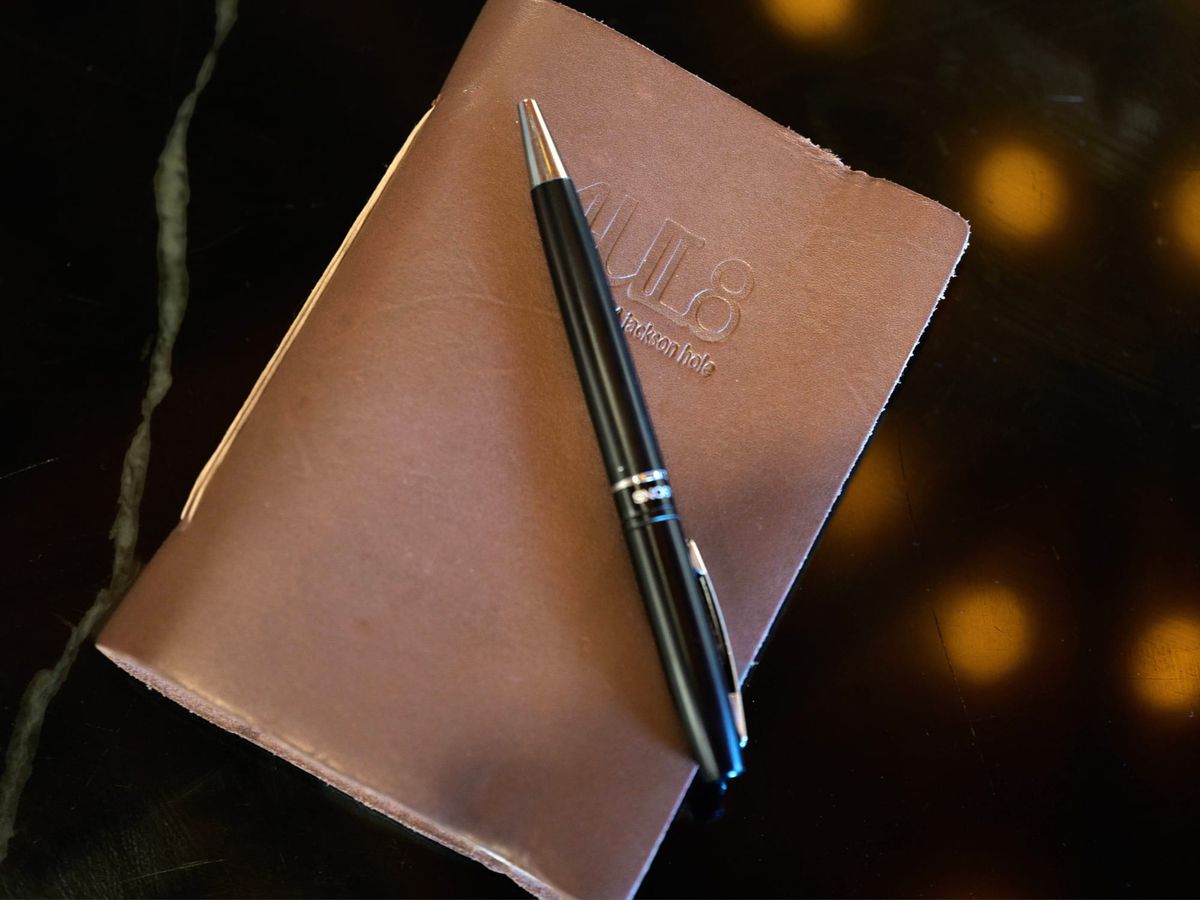
The highest value a leader tends to find is often in the journal we hand out on night one in Jackson Hole. Over the days there and through the months of calls that follow, it fills with questions, follow-ups, and unfinished threads uncovered while reasoning under honest conditions. These are not minutes. They are evidence, in your own hand, of the path you took to get sharper on the question you brought into the room and now own with more conviction.
When we do our job right, the group helps form the conditions behind a decision that a leader can stand behind. Not because someone handed them a better answer, but because their read became sharper and the conviction they carried home was actually earned.